How Better Sleep Improves Athletic Performance & Recovery
Rich Ryan ·August 10, 2026 · 2 min read
How Better Sleep Improves Athletic Performance, Recovery, and Race-Day Results
You can nail your training, nutrition, pacing, and recovery plan—but if your sleep is a mess, you may be leaving one of the biggest performance advantages on the table.
In a recent episode, I sat down with Dr. Rafael Zuzuarregui to talk about something that has made a real difference in my own training and racing: sleep.
And not just “get eight hours and you’ll be fine.”
We got into the practical stuff: sleep quality, athletic recovery, melatonin, circadian rhythm, jet lag, race travel, wearables, screen time, and popular sleep hacks.
Sleep Is Part of Your Training
Athletes love looking for the next workout, recovery tool, or supplement that might give them another 1%.
Meanwhile, sleep is sitting there like, Hello? Remember me?
Dr. Zuzuarregui explains that poor or interrupted sleep can affect both cognitive and physical performance. That matters when you're trying to make smart decisions under fatigue, execute a race plan, and recover from hard training.
Deep sleep is particularly important for the recovery process, with the conversation exploring its relationship with inflammation and the body's ability to recover from the stress you've put it through.
Traveling to Race? Your Sleep Strategy Matters
This becomes even more important for athletes traveling across time zones.
Jet lag isn't simply feeling tired. Your sleep drive and circadian rhythm can become misaligned, which is why you can be completely exhausted during the day and suddenly wide awake when you're supposed to be sleeping.
We break down strategies I've personally used when traveling for HYROX races, including how we approached sleep on overnight flights, light exposure, adjusting to local time, and short-term melatonin use.
With athletes traveling internationally for races—including long trips to events like the HYROX World Championships in Hong Kong—having a plan before you get on the plane can make a huge difference.
Before Buying Another Sleep Hack, Fix the Basics
One of my favorite takeaways from this conversation is also probably the least exciting.
Do the simple stuff first.
Get off your phone before bed. Keep your bedroom dark. Reduce unnecessary noise. Keep the room cooler when possible. Build a consistent sleep and wake schedule.
They're not sexy. Nobody is going to sell you a $500 course explaining how to turn your phone off.
But they matter.
We also get into the fun stuff and rank popular sleep tools and hacks—from cold plunges and saunas to blue-light glasses, cooling mattresses, supplements, nasal strips, mouth tape, eye masks, and earplugs. Some get the thumbs up. Others...not so much.
The biggest shift for me has been making sleep feel like something I can actually control.
You can't guarantee the perfect race.
You can't control everything that happens when you travel.
And you definitely can't convince the sun not to come up at 3 a.m. in Stockholm.
But you can build better sleep habits before race week and have a strategy ready when things aren't perfect.
That's the real takeaway: sleep isn't separate from athletic performance. It's part of performance.
🎙️ Want the Full Sleep & Performance Strategy?
Listen to the full episode with Dr. Rafael Zuzuarregui as we break down the science of sleep, athletic recovery, jet lag, melatonin, sleep trackers, race travel, and the sleep hacks actually worth considering.
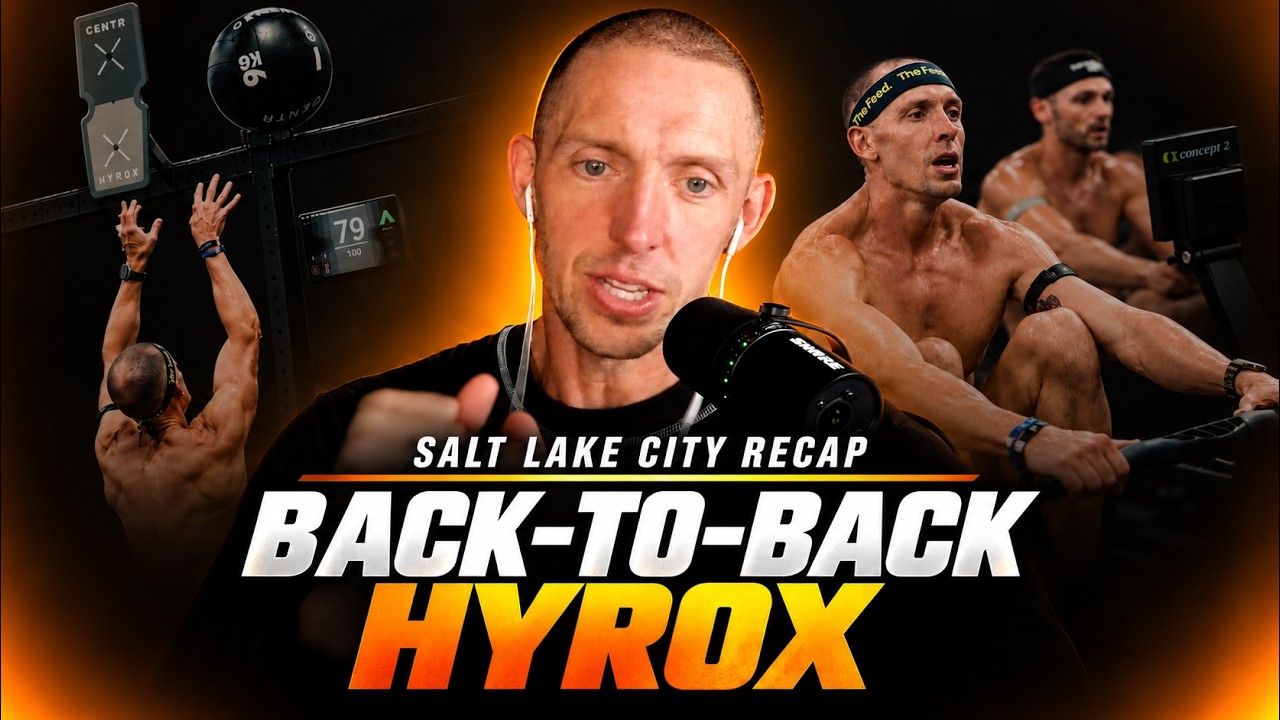
Rich Ryan breaks down his HYROX Salt Lake City weekend, including how to fuel, recover, and mentally prepare for back-to-back races. Plus, he shares lessons from his solo and doubles races, his experience with HYROX Young Stars, and an early look at the new Axis hybrid racing shoe.